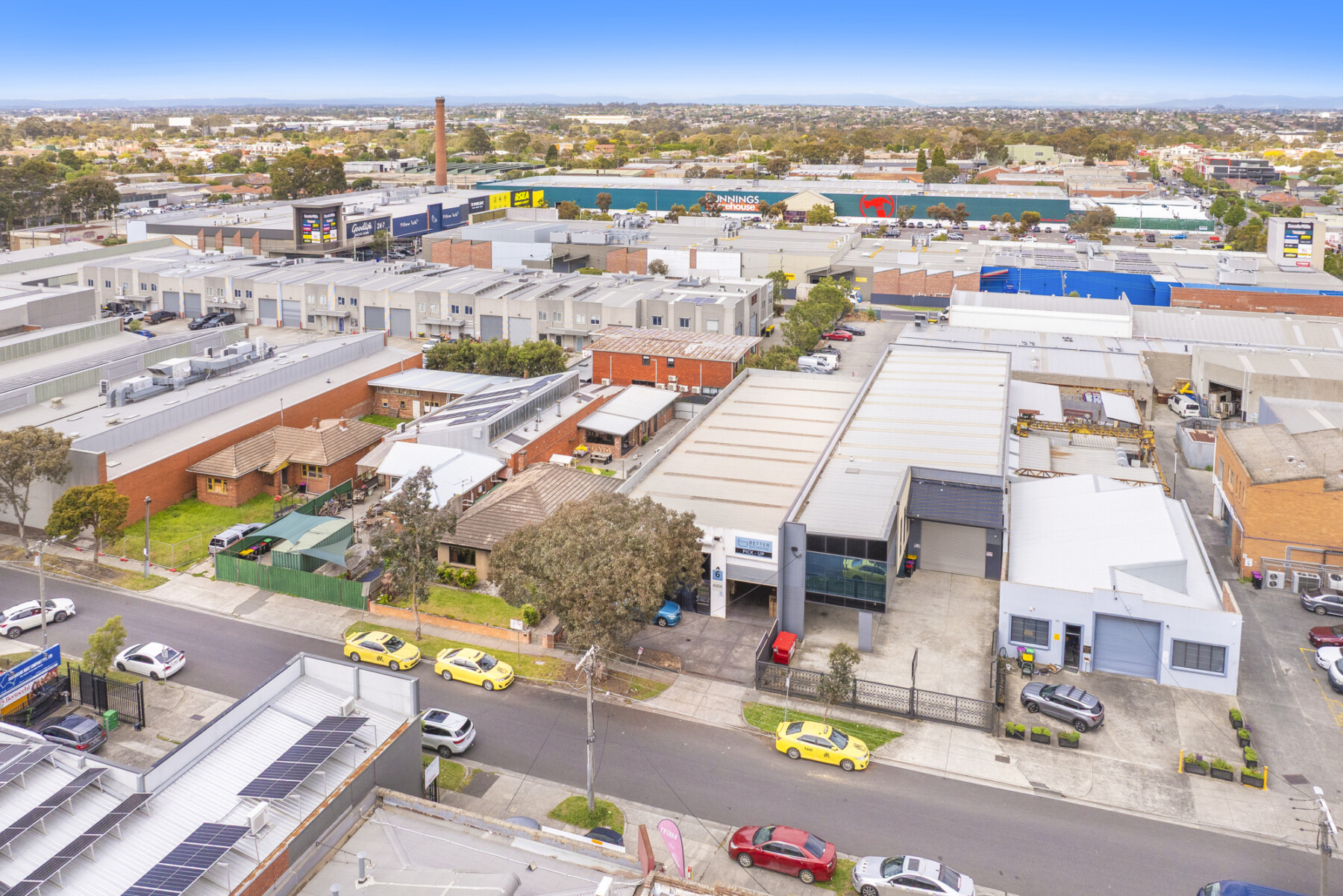
Sub-$10 million
The sub-$10 million range has seen steady turnover, including for strata lots and smaller freehold warehouses. There has been strong participation in this market segment by owner-occupiers and self-managed super fund buyers.
“We expect continued activity in this sector, driven by expansion and investor diversification,” Sandrin said.
Middle markets
Syndicated and private funds looking to scale portfolios and capture rental reversion have been driving activity in the $10 million to $50 million range.
A considerable number of middle market buyers have been targeting assets with rental upside or redevelopment potential – particularly on infill lots with long-term leasing prospects.
Sandrin said, “Sales volumes should remain healthy in 2026, with deals driven by strategic repositioning plans and occupier expansion.”
Institutional
Strong investor interest has translated into prime industrial yields remaining competitive, sitting in the mid-5% range.
“Institutional buyers are selective, pricing in future cash-flow stability and tenant strength.
“Capital is focused on assets with prime logistics tenants, long-WALE assets, infill sites, and strategically-located assets.”
Flight to quality in leasing market intensifies
Melbourne’s industrial leasing market in 2026 will be determined by quality, location and costs, as the flight to quality intensifies.
“Occupiers will increasingly prioritise operational efficiency and certainty over pure rent minimisation. They will place greater weight on total occupancy cost, not just face rent,” said Brent Glassford, Fitzroys Director – Agency.
The leasing market is moving from an exceptionally tight phase into a more balanced environment, following elevated speculative completions in 2024 and 2025. After a period of downwards pressure, vacancy rates are expected to ease in 2026. Vacancy has already lifted in parts of the North and Outer West, giving tenants more choice than they’ve had in several years.
Rental growth will be segmented as occupier momentum is selectively renewed, particularly for high-quality and strategically located assets. Quality assets continue to lease faster and hold rentals, even in locations which have seen vacancy rises.
In 2026, the biggest beneficiaries of Melbourne’s and Victoria’s industrial economy drivers - population growth, freight and logistics intensity, non-discretionary consumption, infrastructure spending, and land and supply constraints - will be most active in leasing industrial space:
- Transport & logistics / 3PL
- Mid to large-format logistics
- 10,000 to 40,000-plus sqm
- High-clearance warehousing
- Victoria-wide
- Food, cold storage & FMCG
- Specialised facilities
- Cold storage and temperature-controlled warehousing
- High power capacity
- Victoria-wide
- Essential and advanced manufacturing
- 2,000 to 10,000sqm
- Functional layouts
- Power and flexibility
- Established industrial precincts - Inner West, North and South-East
- Infrastructure-linked trade operators
- Smaller warehouses with yard
- 5,000 to 10,000sqm
- Hardstand, outdoor storage, easy truck access
- Functional, not necessarily high-spec buildings
- Inner West and North - proximity to job sites is critical